The Mass Spec Identity Check: How a Lab Confirms Which Peptide Is in the Vial
Every peptide has a weight. Not a weight you can feel, but a molecular mass that follows directly from its sequence. Change one amino acid and the mass changes. Add a modification and it changes again. A mass spectrometer measures that mass with great precision. That is why the identity line on a peptide certificate is nearly always a mass spec identity check. This article explains what the instrument measures, what a match means, where the method stops, and why it is paired with HPLC.
A balance for molecules
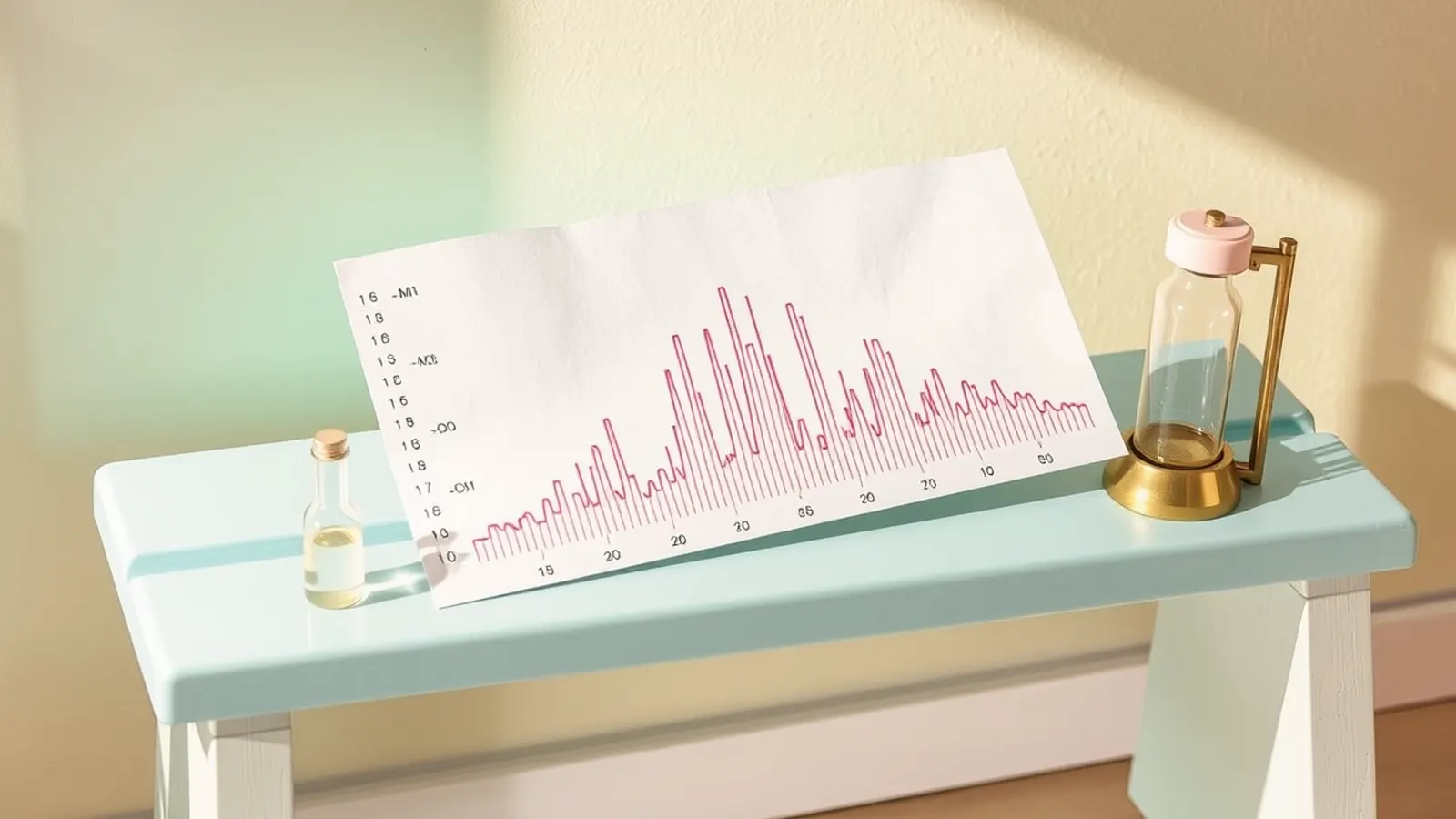
A mass spectrometer does three things in order. It turns molecules into ions, which are molecules carrying an electric charge. It sorts those ions by their mass-to-charge ratio, written m/z. And it counts how many ions arrive at each value. The result is a spectrum: a set of thin lines across a mass axis, with the tallest lines marking the most common ions.
Peptides are fragile and do not fly on their own, so the ionisation step matters. Two gentle methods made peptide mass spectrometry routine. Electrospray ionisation sprays the dissolved sample out of a fine charged capillary and lets the droplets shrink until charged peptide ions remain (Fenn et al., 1989). Matrix-assisted laser desorption, or MALDI, dries the sample inside a crystal matrix and knocks ions loose with a laser pulse (Karas and Hillenkamp, 1988). Both leave the peptide whole, which is the point. You want to weigh the molecule, not its pieces.
Calculated mass versus observed mass
Before the sample is run, the mass is already known on paper. Each amino acid has a fixed residue mass. Add them up, add the water that caps the chain ends, add any modification, and you have the calculated, or theoretical, mass. The instrument then reports the observed mass. The identity line on a certificate is, at heart, these two numbers side by side and a statement that they agree within the instrument's tolerance.
You may see the mass given in daltons (Da), which for this purpose is the same as the unit g/mol. You may also see two different calculated masses for one peptide. The average mass uses the natural mix of isotopes for each element. The monoisotopic mass uses only the lightest isotope of each. High-resolution instruments usually report monoisotopic, and the two values can differ by a dalton or so for a mid-sized peptide. A certificate should say which one it compared. Matching the wrong one is a common source of a false "mismatch".
Why one peptide shows several peaks
A newcomer opens an electrospray spectrum and sees three or four tall lines instead of one. Nothing is wrong. Electrospray tends to put more than one proton on a peptide. A peptide carrying one proton shows at (M+1)/1. The same peptide carrying two protons shows at (M+2)/2, roughly half the value. Three protons, roughly a third. These are called charge states. The software reads the spacing of the lines, determines the charge of each, and reconstructs one mass. On a certificate you may see the raw m/z values listed, the reconstructed mass, or both.
Zoom in on any one of those lines and it splits into a small cluster a dalton apart. That is the isotope pattern, mostly from carbon-13. It is expected, and its shape is one more quiet check that the ion is a real peptide of about the right size.
What a mass match tells you
A match tells you the lot contains a molecule with the same elemental formula as the peptide named on the label. In practice that means the right amino acids, the right count, and the right modifications. A missing residue would come in light by the mass of that residue. An extra protecting group would come in heavy by a known amount. Oxidation adds sixteen. Deamidation adds about one. These shifts are so specific that an experienced analyst reads them like a fingerprint. If a small satellite peak sits a fixed distance from the main one, the analyst usually knows what it is.
What mass spectrometry cannot tell you
This is the part a careful buyer should hold on to. A mass is a sum. Several different molecules can share it.
- Order of amino acids. Two peptides with the same residues in a different order weigh exactly the same. A single-stage mass measurement cannot separate them. A tandem method, written MS/MS, breaks the peptide into fragments and reads the sequence from the fragment ladder. Routine lot certificates usually report single-stage mass; sequence confirmation is a deeper test.
- Handedness. A D-amino acid and its L-form weigh the same. Mass spectrometry is blind to chirality.
- Amount. Peak height in a spectrum depends on how well each ion flies, not only on how much is there. Mass spectrometry is a poor way to measure quantity unless carefully calibrated.
- Purity. For the same reason, a spectrum is not a purity measurement. Minor species may be under-represented or over-represented.
- Counterions and water. Salt and moisture in the dry cake fall away during ionisation. The spectrum says nothing about how much of the vial's weight they make up.
How mass spec pairs with HPLC
Put the two methods side by side and their strengths line up neatly. HPLC separates and quantifies: it shows how many distinct things are in the sample and what share the main one holds. Mass spectrometry identifies: it shows what the main thing weighs and whether that weight is the expected one. Neither does the other's job well.
Many labs couple them directly as LC-MS. The column separates the sample, and the liquid leaving it flows straight into the mass spectrometer, so every peak on the chromatogram gets its own mass. That is a strong combination. The main peak is confirmed by mass, and each small peak is labelled too, which turns a list of anonymous impurities into a list of named related substances. If a certificate says LC-MS, it is telling you the identity and purity data came from the same run on the same sample.
We cover the HPLC side in its own article: HPLC purity, and what the number means. Read the two together and the certificate stops being a wall of numbers.
Reading the identity line on a certificate
| Field | What to look for |
|---|---|
| Method | ESI or MALDI; single-stage MS or LC-MS; the instrument type if given |
| Calculated mass | The theoretical value, with a note of monoisotopic or average |
| Observed mass | The measured value, or the m/z list it was reconstructed from |
| Tolerance | How close the two must be to count as a match; tighter on high-resolution instruments |
| Result | A clear statement: conforms, matches, or confirmed |
| Lot | The same lot number as the HPLC line and the vial label |
A short peptide is the easiest place to see all of this. Selank is a seven-residue peptide, so its spectrum is compact, with only a couple of charge states, and the identity line on its lot certificate is a quick read.
A note on confidence
None of this makes mass spectrometry a weak test. Within what it measures, it is one of the most precise tools in the laboratory. The caution is only about scope. A mass match is strong evidence that the right molecule is present. It is silent on how much, how clean, and in which order. Those answers come from the other lines on the certificate, which is why a good certificate has more than one.
Frequently asked questions
How does mass spectrometry confirm a peptide's identity?
The lab calculates the mass the sequence should have, measures the mass of the ions from the sample, and reports whether the two agree within the instrument's tolerance.
Why does one peptide give several peaks in an ESI spectrum?
Electrospray adds a different number of protons to different copies of the same peptide. Each charge state appears at its own m/z, and the software combines them into one mass.
Can mass spectrometry tell two peptides apart if they have the same amino acids in a different order?
Not from mass alone. They weigh the same. Tandem MS/MS fragments the peptide and reads the order from the pieces.
Is mass spectrometry a purity test?
No. Peak heights depend on how each ion flies, not only on amount. Purity comes from HPLC, which is why certificates report the two separately.
See it in the catalogue: Selank.
For laboratory research use only. Products sold by Amino Party Peptides are not drugs, foods, supplements or cosmetics and are not for human or veterinary use. This article summarises published literature; it is not medical advice and not a usage guide.