Amino Party Peptides
The research,
sourced.
What the published studies on each compound actually report, where the evidence stops, and how to read the paperwork that comes with a lot. Every summary links its sources.

What "Research Use Only" Means for Buyers
Six words sit on every label, the gate and the checkout page. Here is what they mean for you, what we do and do not do, and why every certificate belongs to one lot.
TB-500 and Thymosin Beta-4: A Research Overview
TB-500 is a trade name, not a molecule. Here is what analytical chemists found inside it, how it relates to the actin-binding protein thymosin beta-4, and what the research does and does not cover.
SS-31 and MOTS-c: Two Roads Into Mitochondrial Research
One peptide was engineered to bind a membrane lipid. The other is written into mitochondrial DNA. SS-31 and MOTS-c compared on origin, target, evidence and testing.

Selank and Semax Research Overview: Same Tail, Different Heads
Two Russian heptapeptides with the same three-residue tail and very different heads. Where each came from, what the studies cover, and the registration status stated exactly.
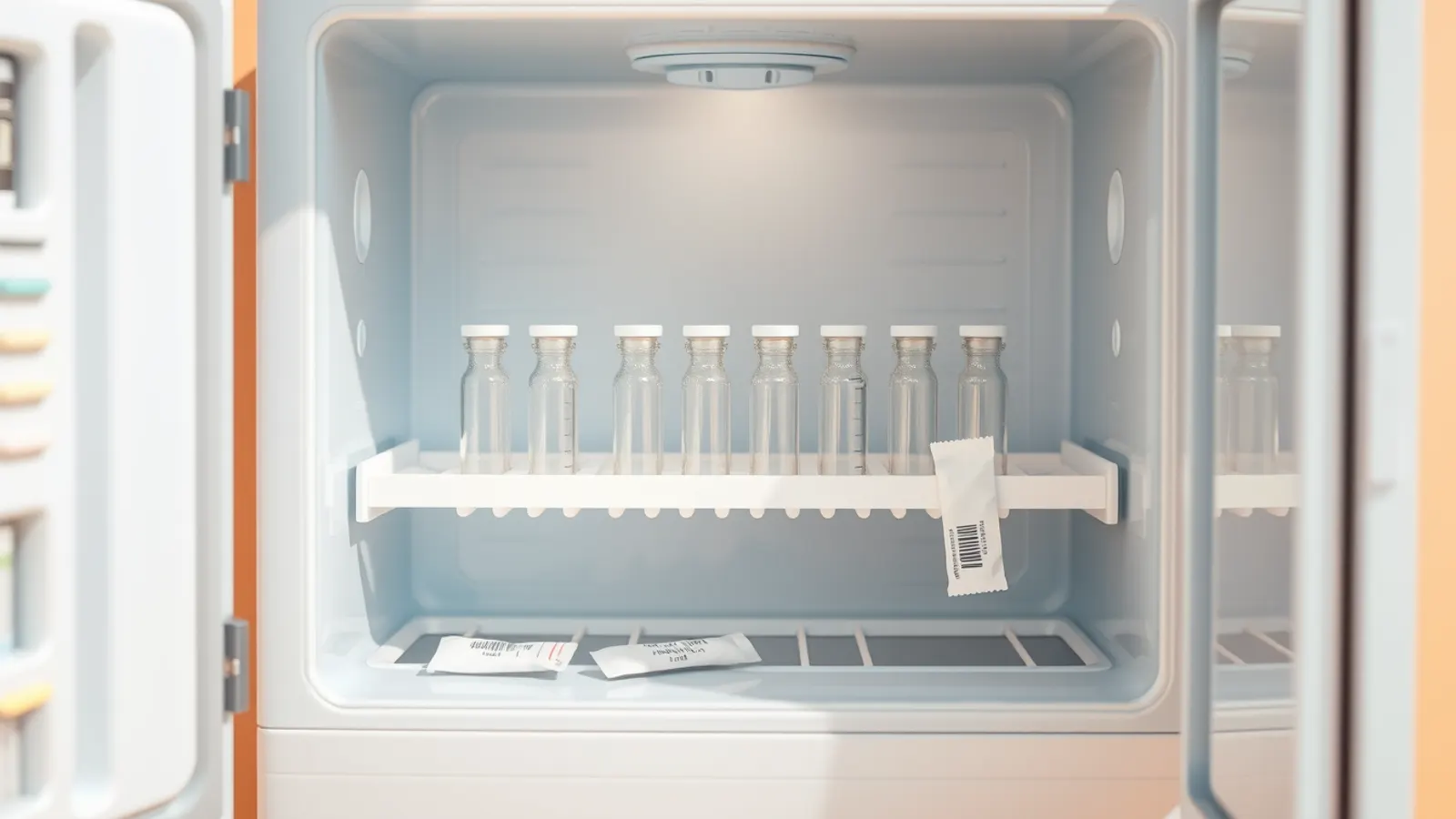
Peptide Storage and Stability Basics: Heat, Light, Moisture and the Freezer
A dry peptide keeps for a long time. A dissolved one does not. Here is the chemistry behind that, the three hazards to watch, and what the storage line on a label is asking for.

NAD+ Research Overview: The Coenzyme on a Peptide Shelf
NAD+ is the one non-peptide on a research-peptide shelf. Three common misunderstandings, the research areas, what the human trials really tested, and the formats a lab buys.

The Mass Spec Identity Check: How a Lab Confirms Which Peptide Is in the Vial
Every peptide has a mass that follows from its sequence. A mass spectrometer measures it. Here is what a match means, where the method stops, and why it is paired with HPLC.
KLOW and GLOW Blends Explained: What Is in PTY-KLW and PTY-GLW
GLOW is three compounds. KLOW is the same three plus KPV. We read the ingredient list for you, give each component its one-paragraph research summary, and explain why the mixtures have no literature of their own.

HPLC Purity: What the Number on a Peptide Certificate Means
HPLC purity is the most quoted number on a peptide certificate and the most misread. Here is what the chromatogram shows, and what the percentage does and does not say.
How to Read a Peptide COA, One Line at a Time
A certificate of analysis has six lines that matter. Here is what each one says, and which part of the label to hold it against.

GHK-Cu Research Guide: The Copper Tripeptide, Explained Simply
A plain-language guide to GHK-Cu: the three amino acids and one copper ion behind the name, the four kinds of study it appears in, and exactly where the published evidence stops.

Epitalon Research Overview: A Four-Letter Peptide From the Pineal Literature
Epitalon is four amino acids modeled on a pineal gland extract. Here is where it came from, what the cell and mouse studies looked at, and where the evidence stops.
BPC-157: What the Studies Show, Counted Out
How many BPC-157 studies are there, in what models, by whom, and how many in people? We count them out from two 2025 reviews and show where the record ends.

BPC-157 + TB-500 Blend: Two Literatures in One Vial
A blend vial holds two compounds but zero combined studies. We explain what "studied" means for a blend, summarise each literature side by side, and show how a two-component lot is tested.
Bioregulator Peptides Guide: Vilon, Pinealon, Vesugen, Testagen, Prostamax and Thymalin
Six very short peptides from one research tradition, lined up from shortest to longest. What the literature covers for each, and the four limits that run through all of it.