
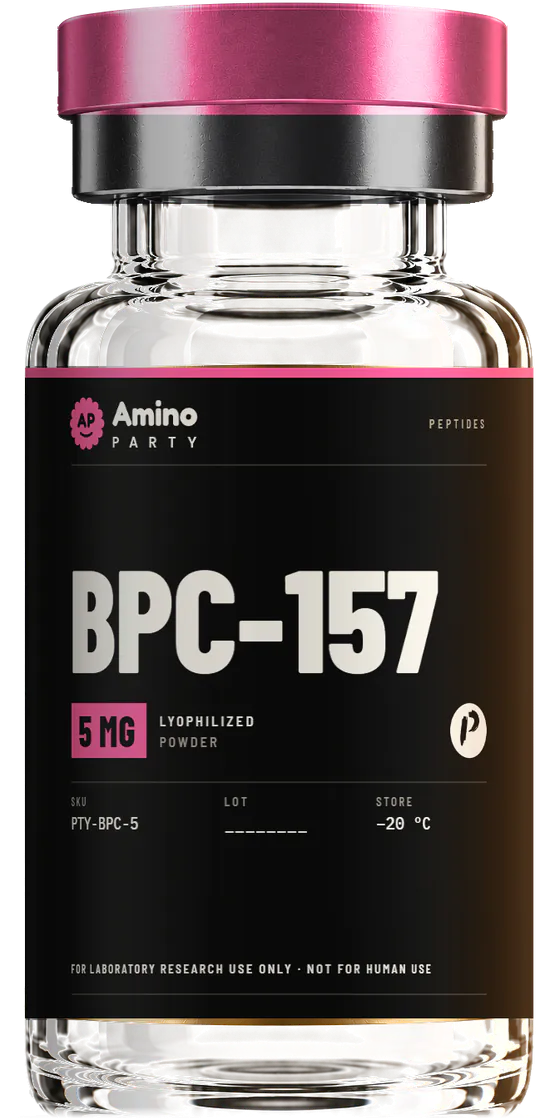
Research peptides
BPC-157
BPC-157 is a lab-made chain of 15 amino acids, which is why it is also called a pentadecapeptide. Its sequence was first reported as a piece of a protein found in stomach fluid.
- Container
- Glass vial, crimp seal, flip-top cap
- Storage
- -20 °C, desiccated, protect from light
- Paperwork
- Lot certificate (HPLC + mass spec) shown before you pay
Lot certificates
You’ll see American Peptides on the lab’s copy. They’re our supplier.
- 5 mg, lot BP5-0803: 99.73% purity (RP-HPLC), 5.33 mg measured, identity confirmed by mass spec. Issued 2026-08-28 by Bioviridian Inc.. Verify certificate COA7609
- 10 mg, lot BP10-0803: 99.71% purity (RP-HPLC), 10.44 mg measured, identity confirmed by mass spec. Issued 2026-08-28 by Bioviridian Inc.. Verify certificate COA7603
- 15 mg, lot BP15-0803: 99.84% purity (RP-HPLC), 15.75 mg measured, identity confirmed by mass spec. Issued 2026-08-28 by Bioviridian Inc.. Verify certificate COA7581
Our vials are filled from lots made by our supplier, American Peptides, and tested by Bioviridian Inc.The laboratory’s original certificate lists American Peptides as the vendor. Look up the code at bioviridians.com to check it.
What researchers study it for
- Animal models of tendon, ligament and muscle damage
- Bone repair in animals
- Protection of the gut lining in lab models
- New blood vessel growth and nitric oxide pathways
How it is thought to work
Nobody has pinned down how it acts. Work in animals and cultured cells has pointed to VEGFR2, the Akt-eNOS nitric oxide pathway, ERK1/2 and FAK-paxillin, and to changes in how much growth hormone receptor fibroblasts make. One Zagreb lab is behind the bulk of these preclinical papers.
Where the research stands
Mostly animal and cell work. In people, the literature amounts to three small pilot reports; no large controlled trial has been run. WADA bans it under S0 as a non-approved substance.
Sources
- Vasireddi N, et al. (2025). Emerging Use of BPC-157 in Orthopaedic Sports Medicine: A Systematic Review. HSS Journal.
- McGuire FP, et al. (2025). Regeneration or Risk? A Narrative Review of BPC-157 for Musculoskeletal Healing. Current Reviews in Musculoskeletal Medicine.
- Lee E, Burgess K. (2025). Safety of Intravenous Infusion of BPC157 in Humans: A Pilot Study. Alternative Therapies in Health and Medicine.
- PharmaCotherapia d.o.o. (sponsor) (2015). Phase I, Pilot Study in Healthy Volunteers, to Assess the Safety and Pharmacokinetics of PCO-02, Which Active Ingredient is BPC-157. ClinicalTrials.gov.
Read more
For laboratory research use only. Not a drug, food, supplement or cosmetic; not for human or veterinary use. Nothing on this page is medical advice or a usage guide.