
Sprays
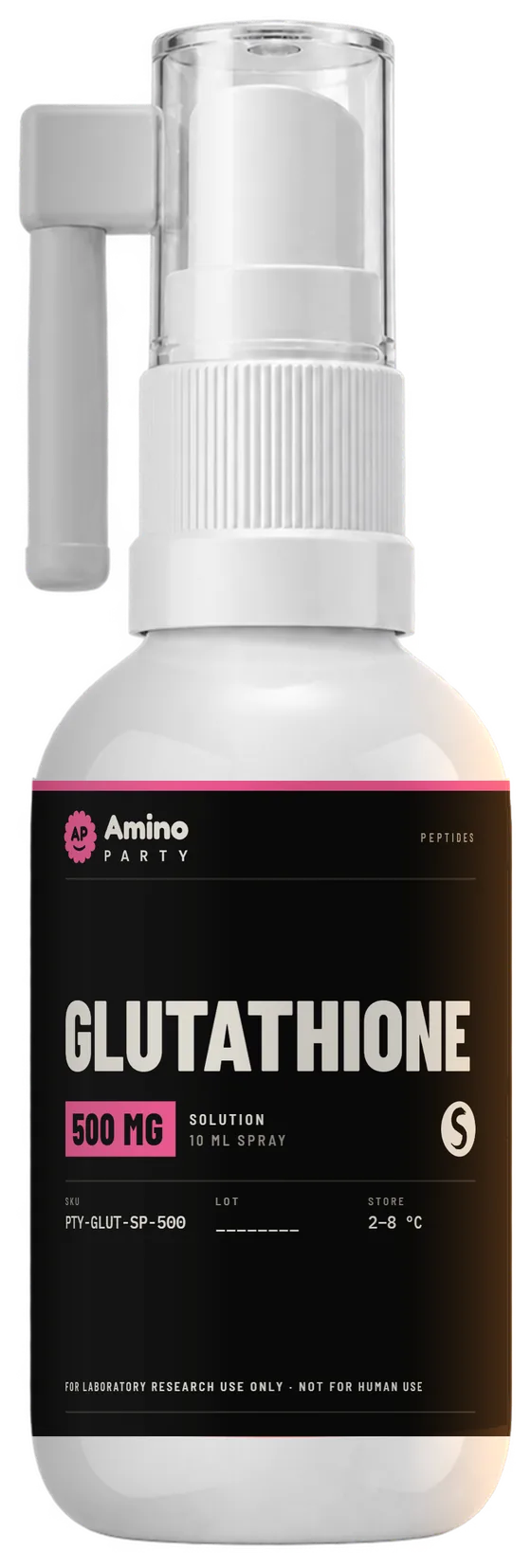
Glutathione spray
Glutathione is a three-amino-acid peptide, gamma-L-glutamyl-L-cysteinylglycine, and the most plentiful non-protein thiol in every mammalian tissue. It cycles between a reduced state (GSH) and an oxidized disulfide state (GSSG).
- Container
- 10 mL spray bottle, pump and overcap
- Storage
- 2 to 8 °C, protect from light
- Per bottle
- 500 mg glutathione · 50 mg/mL
- Paperwork
- Lot certificate (HPLC + mass spec) shown before you pay
What researchers study it for
- Oxidative stress and redox signaling
- How cells control glutathione production
- Supplement intake and glutathione levels in the body
- Skin color
- Liver disease and scarring
How it is thought to work
The basic chemistry is well mapped. Cells build glutathione in the cytosol through two enzyme steps; glutamate cysteine ligase sets the pace, and the supply of cysteine matters a great deal. Its antioxidant role runs mostly through glutathione peroxidase, which converts GSH to GSSG; the cell then regenerates GSH using NADPH.
Where the research stands
Human trials exist with mixed results. One randomized study followed 54 adults for half a year and measured a rise in circulating glutathione among those taking the supplement. When systematic reviews pooled research on skin lightening, they judged the overall picture inconclusive and noted that study quality varied. Glutathione is widely available as a dietary supplement.
Sources
- Lu SC. (2013). Glutathione synthesis. Biochimica et Biophysica Acta.
- Richie JP Jr, et al. (2015). Randomized controlled trial of oral glutathione supplementation on body stores of glutathione. European Journal of Nutrition.
- Dilokthornsakul W, et al. (2019). The clinical effect of glutathione on skin color and other related skin conditions: A systematic review. Journal of Cosmetic Dermatology.
- Sarkar R, et al. (2025). Glutathione as a skin-lightening agent and in melasma: a systematic review. International Journal of Dermatology.
For laboratory research use only. Not a drug, food, supplement or cosmetic; not for human or veterinary use. Nothing on this page is medical advice or a usage guide.