
Sprays
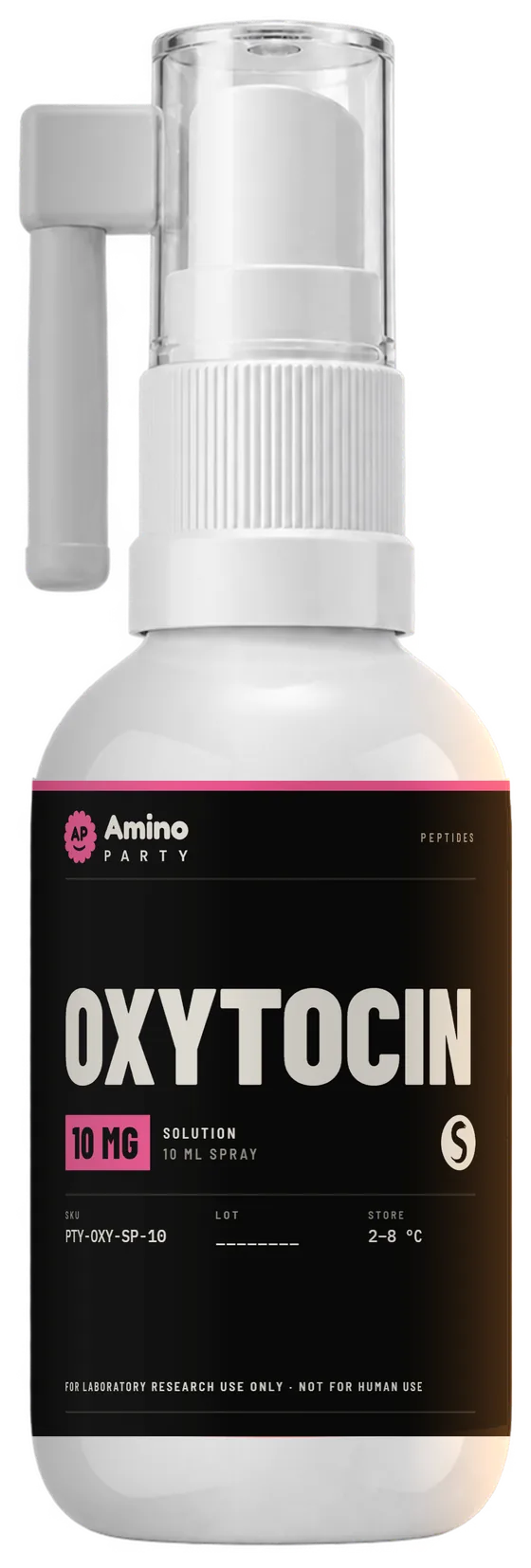
Oxytocin spray
Oxytocin is a nine-amino-acid hormone that was first found in pituitary extracts from mammals; the version used in medicine is produced synthetically. It has actions in the brain as well as in peripheral tissues, the uterus among them.
- Container
- 10 mL spray bottle, pump and overcap
- Storage
- 2 to 8 °C, protect from light
- Per bottle
- 10 mg oxytocin · 1 mg/mL
- Paperwork
- Lot certificate (HPLC + mass spec) shown before you pay
What researchers study it for
- Labor and bleeding after delivery
- Milk release and uterine contraction
- Social and emotional behavior
- Trials in autism spectrum disorder
How it is thought to work
A single receptor handles oxytocin's signaling: a seven-transmembrane G protein-coupled receptor that pairs with Gq or Gi proteins, a point that is firmly established. In the uterus, the hormone drives contractions by lifting calcium levels inside cells, and the number of receptors climbs sharply over pregnancy. The chain from receptor to behavior, by contrast, is still unclear.
Where the research stands
Approved medicine (Pitocin) for obstetric use. Synthetic oxytocin carries an FDA label as a prescription drug for inducing labor when medically indicated and for controlling bleeding after birth. Its behavioral uses are not established: a placebo-controlled trial with 290 children and adolescents with autism found no meaningful difference from placebo.
Sources
- Par Health USA, LLC. (2026). PITOCIN (OXYTOCIN) INJECTION [PAR HEALTH USA, LLC]. DailyMed (U.S. National Library of Medicine), prescribing information.
- Jurek B, Neumann ID. (2018). The Oxytocin Receptor: From Intracellular Signaling to Behavior. Physiological Reviews.
- Salati JA, et al. (2019). Prophylactic oxytocin for the third stage of labour to prevent postpartum haemorrhage. Cochrane Database of Systematic Reviews.
- Sikich L, et al. (2021). Intranasal Oxytocin in Children and Adolescents with Autism Spectrum Disorder. The New England Journal of Medicine.
For laboratory research use only. Not a drug, food, supplement or cosmetic; not for human or veterinary use. Nothing on this page is medical advice or a usage guide.